
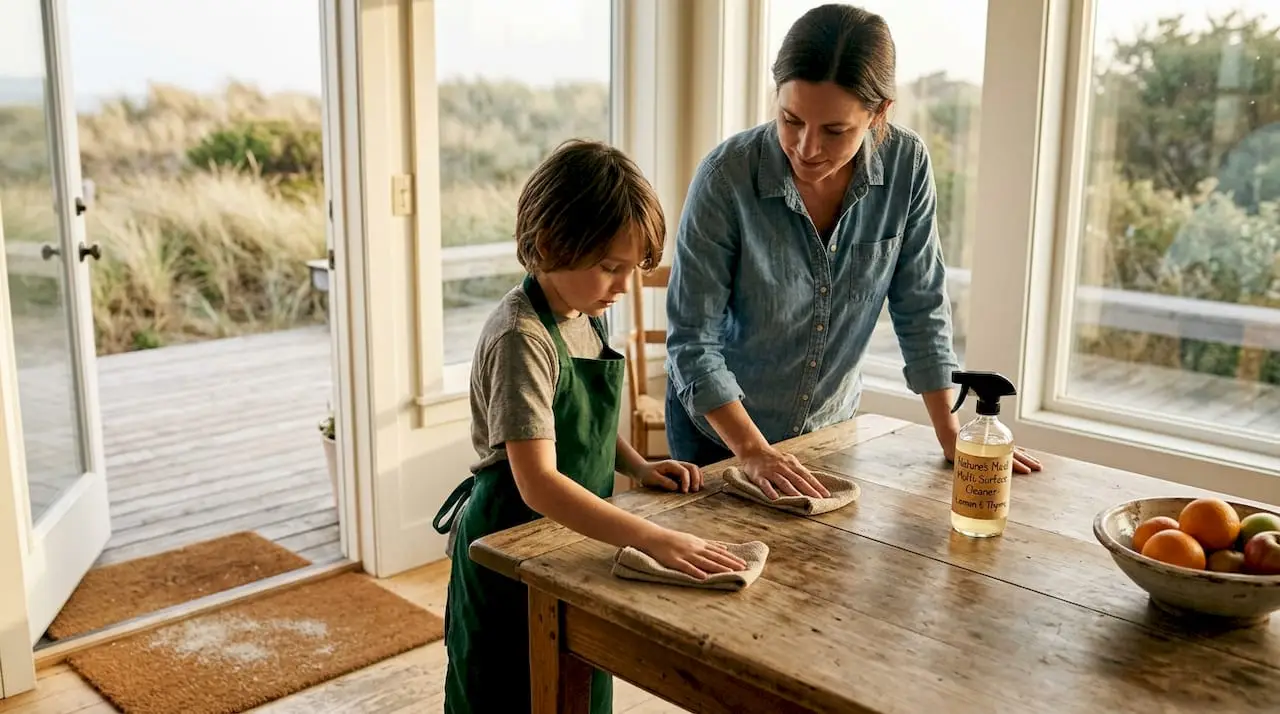
Living in Myrtle Beach means embracing salt air, sandy floors, and the kind of humidity that settles into every corner of a home. For families with children and pets, keeping that home genuinely clean can feel like a constant negotiation between effectiveness and safety. Many households reach for the strongest cleaner on the shelf, not realizing they are trading one problem for another. Harsh chemicals linger in the air, settle on floors where pets walk and children play, and contribute to indoor air pollution that rivals outdoor exposure. This guide offers a measured, step-by-step path toward a home that is both truly clean and truly safe.
Table of Contents
- Why green home cleaning matters for Myrtle Beach families
- Essential tools and green ingredients to gather
- Step by step green cleaning process for every room
- Common mistakes and Myrtle Beach-specific green cleaning tips
- How to know your green cleaning is working
- Why technique matters more than products
- Eco-friendly cleaning help for your Myrtle Beach home
- Frequently asked questions
Key Takeaways
| Point | Details |
|---|---|
| Green cleaning is effective | Lab-tested green methods remove nearly as much dirt as conventional products without harsh chemicals. |
| Ingredients matter | Choose unscented, plant-based cleaners and safe tools—especially for families with pets or kids. |
| Technique makes the difference | Let cleaners sit (dwell) and follow a stepwise order for the best, safest results. |
| Watch for local challenges | Myrtle Beach humidity and sand call for frequent floor care and special surface precautions. |
| Seek expert support when needed | Professional green cleaning services can make deep cleans safer and easier. |
Why green home cleaning matters for Myrtle Beach families
There is a quiet awakening happening in homes across Myrtle Beach. More families are recognizing that the sharp, chemical scent of a freshly cleaned bathroom is not a sign of purity. It is often a sign of residue. Standard household cleaners frequently contain volatile organic compounds (VOCs), synthetic surfactants, and preservatives that linger on surfaces long after the bottle is put away.
Green cleaning in Myrtle Beach has grown in popularity precisely because families here understand the stakes. The coastal climate encourages windows to stay open, which means outdoor allergens and indoor cleaning residues circulate together. Children crawl on floors that were mopped with synthetic detergents. Pets lick their paws after walking across chemically treated surfaces.
The science supports the shift. Green home cleaning uses plant-derived surfactants, mineral compounds like baking soda and citric acid, and enzymes for cleaning without synthetic chemicals, prioritizing biodegradable ingredients that break down within 28 days. Studies from California have found that switching to green products reduces chemical exposure by up to 90% in residential settings.
Here is what green cleaning offers Myrtle Beach households:
- Safer air quality for children and adults with respiratory sensitivities
- Reduced pet exposure to toxic residues on floors and upholstery
- Faster biodegradation of ingredients that reach local waterways
- Comparable cleaning power to conventional products when used correctly
- Fewer synthetic fragrances that can trap sand particles and irritate airways
Statistic to consider: EPA Safer Choice certified green products remove 94% of soils compared to 96% for conventional cleaners. That 2% difference is negligible. The health difference is not.
Now that you see the “why,” let’s get into what you will need for a safe and effective green clean.
Essential tools and green ingredients to gather
Preparing for a green cleaning ritual is itself an act of care. Gathering the right ingredients and tools before beginning means the process unfolds with intention rather than improvisation. For Myrtle Beach homes, where sand and humidity are constant companions, the right supplies make a meaningful difference.
Core green cleaning ingredients:
| Ingredient | Purpose | Safety note |
|---|---|---|
| Baking soda | Mild abrasive, deodorizer | Safe for pets and children |
| Citric acid | Dissolves mineral deposits | Avoid eyes; rinse well |
| Castile soap | Plant-based surfactant | Choose unscented for pets |
| White vinegar | Cuts grease, disinfects | Never use on natural stone |
| Hydrogen peroxide (3%) | Disinfects surfaces | Keep away from colored fabrics |
| Essential oils (optional) | Fragrance only | Verify pet safety before use |
Citric acid biodegrades in just 5 days, compared to 30 or more days for many synthetic alternatives. This matters in a coastal community where stormwater runoff reaches sensitive ecosystems quickly.
Core tools to gather:
- Microfiber cloths (several, color-coded by room)
- Two-bucket mopping system (one for clean solution, one for rinse)
- HEPA-filter vacuum for sand and pet dander
- Labeled glass or BPA-free spray bottles
- A soft-bristle scrub brush
- Rubber gloves
Microfiber cloths outperform paper towels significantly, trapping particles rather than pushing them around. The two-bucket mopping method prevents dirty water from being spread back across floors, which is especially important in homes where sand tracks in from the beach daily.
Pro Tip: Always choose unscented castile soap and unscented formulas when pets are present. Many essential oils, including tea tree, eucalyptus, and citrus, are toxic to cats and dogs even in small concentrations. When in doubt, skip the fragrance entirely and let the cleanliness speak for itself.
Once you have your safe supplies ready, it is time to tackle each room using proven green cleaning science.
Step by step green cleaning process for every room
Cleaning transcends mere task when it becomes a mindful practice. Moving through a home with intention, following a sequence that honors both the space and the people who live in it, produces results that feel as good as they look. The order matters. The timing matters.
The foundational sequence:
- Remove clutter and open windows to allow fresh air circulation, especially important in Myrtle Beach’s humid climate where moisture can concentrate cleaning vapors.
- Dry dust all surfaces from top to bottom, including ceiling fans, shelves, and baseboards. Sand and dander settle downward, so always work from high to low.
- Apply your green cleaner and allow dwell time. Surfactants lift soil via surface tension reduction, acids dissolve mineral deposits, and enzymes digest organic matter. The key is allowing 5 to 10 minutes of dwell time for efficacy that matches conventional cleaners.
- Wipe or scrub in circular motions with a microfiber cloth, working from clean areas toward dirtier ones.
- Rinse surfaces where needed, particularly in kitchens and bathrooms.
- Vacuum last using a HEPA filter vacuum to capture any loosened particles.
Room-by-room guidance:
| Room | Main challenge | Best green approach |
|---|---|---|
| Kitchen | Grease buildup | Castile soap + baking soda paste; dwell 7 minutes |
| Bathroom | Moisture and mineral deposits | Citric acid spray; dwell 10 minutes |
| Floors | Sand and humidity | pH-neutral castile solution; two-bucket method |
| Living areas | Pet hair and dander | HEPA vacuum first; microfiber wipe surfaces |
| Bedrooms | Dust mites and allergens | Dry dust, then lightly mist and wipe |
In the kitchen, grease responds beautifully to a paste of castile soap and baking soda. Apply it to stovetops, let it rest, and wipe away with a warm, damp microfiber cloth. For bathrooms, citric acid dissolved in warm water cuts through the mineral scale that Myrtle Beach’s water supply tends to leave behind. Spray it on faucets, showerheads, and tile grout, and let the chemistry do the work before scrubbing.

For floors, the Myrtle Beach green cleaning gallery reflects how much variety there is in local homes, from hardwood to tile to laminate. Each surface calls for minimal moisture and a pH-neutral solution. Overwetting any floor, especially wood, invites warping and mold in a humid coastal climate.
Pro Tip: Spray your green cleaner, set a timer for 7 minutes, and move on to another task. When you return, the cleaning is largely done for you. This dwell time approach reduces scrubbing effort by half and improves results significantly.
As you work through rooms, there are pitfalls that can reduce effectiveness or even damage surfaces if overlooked.

Common mistakes and Myrtle Beach-specific green cleaning tips
Even the most thoughtful cleaning ritual can go astray without awareness of a few important cautions. These are not minor technicalities. Some mistakes can etch stone, warp wood, or create a cleaning solution that cancels itself out.
Mistakes to avoid:
- Mixing vinegar and castile soap. These two popular green ingredients neutralize each other when combined, leaving a cloudy, ineffective residue. Use them separately, rinsing between applications.
- Using vinegar on natural stone or marble. Vinegar etches natural stone surfaces permanently. Stick to pH-neutral castile soap solutions on granite, marble, or travertine.
- Oversaturating wood floors. Excess moisture causes warping and encourages mold growth, a particular concern in Myrtle Beach’s humid months.
- Skipping labels on homemade solutions. A spray bottle of citric acid solution looks identical to one of plain water. Label everything clearly, especially in homes with children.
- Using baking soda and vinegar together in drains. While the fizzing action feels satisfying, the neutralization reaction reduces the cleaning power of both. Use them separately for better results.
Myrtle Beach-specific best practices:
“Homes near the coast face a unique combination of sand abrasion, salt air, and high humidity. These conditions call for more frequent floor care and HEPA vacuuming than inland homes typically require. Staying consistent with a weekly rhythm prevents sand from acting as a slow abrasive on floors and upholstery.” — Green Cleaning
- Vacuum high-traffic areas every two to three days during peak beach season
- Use doormats at every entrance and shake them outdoors frequently
- Wipe pet paws after outdoor walks to reduce sand and allergen tracking
- Check fireplace cleaning tips if your home has a wood-burning or gas fireplace, as soot and ash require specific green approaches
- Avoid heavily fragranced cleaners near air vents, as synthetic fragrances can concentrate in HVAC systems and circulate throughout the home
The EPA’s guidance on pet-safe labeling emphasizes reading every ingredient list carefully and storing all cleaning products, even natural ones, in locked or elevated cabinets away from curious animals and children.
With your safe strategy and expert tweaks, here is how you will know it is working.
How to know your green cleaning is working
Effectiveness in green cleaning is not measured by scent or chemical sharpness. It is measured by what is no longer present. A truly clean home feels lighter, breathes easier, and welcomes its inhabitants with a sense of calm rather than chemical assault.
Signs your green routine is working:
- Surfaces feel smooth and residue-free after wiping
- The air smells fresh and neutral, not perfumed or chemical
- Pets settle comfortably on floors and furniture without irritation
- Visible dust and sand accumulation slows between cleanings
- Family members with allergies or sensitivities report fewer symptoms
- No sticky film remains on kitchen counters or bathroom tiles
Consider keeping a simple observation log for the first month. Note which rooms feel cleanest, which products worked best on specific surfaces, and how often you needed to clean each area. This kind of mindful tracking helps refine a routine that truly fits your home.
The evidence is reassuring. EPA Safer Choice products remove 94% of soils compared to 96% for conventional cleaners. That gap is so small it is practically invisible in daily life. What is not invisible is the cumulative benefit of removing harsh chemicals from the spaces where your family rests, plays, and breathes.
Families who have made the transition often share through client testimonials that the change was not just physical. The home felt different. More peaceful. More intentional. That is the quiet reward of a green cleaning practice done well.
Why technique matters more than products
Here is a perspective that most green cleaning guides overlook entirely: the product is only half the equation. The technique is the other half, and it is the half that most people skip.
Countless homeowners invest in beautiful, certified green cleaning products and then spray and wipe immediately, wondering why results feel underwhelming. The answer is almost always dwell time. Dwell time transforms green cleaning efficacy. Spraying, waiting, and then wiping consistently outperforms immediate scrubbing, regardless of what product is being used.
Order of cleaning matters just as much. Cleaning a bathroom floor before cleaning the toilet means you are redistributing bacteria you just removed. Vacuuming before mopping captures the particles that mopping would otherwise push into corners. These are not complicated principles. They are simply overlooked ones.
Myrtle Beach’s climate adds another layer of technique. Humidity means surfaces stay damp longer, which can encourage mold if cleaning solutions are not fully dried. Opening windows after cleaning, running a ceiling fan, and using microfiber cloths that absorb rather than smear moisture all contribute to a finish that lasts.
A safe and healthy cleaning environment is not achieved by purchasing the right bottle. It is achieved by following a process with patience and care. The homes that consistently feel the cleanest are not the ones with the most products under the sink. They are the ones where the ritual is practiced with attention and consistency.
Eco-friendly cleaning help for your Myrtle Beach home
Some cleaning challenges call for more than a weekend ritual. Deep cleaning after a renovation, preparing a home for new tenants, or addressing years of accumulated grime in hard-to-reach areas are moments when professional support makes a meaningful difference.

Nature’s Maid brings the same mindful, plant-based approach to professional cleaning that this guide encourages at home. Whether you are curious about professional green cleaning solutions tailored for coastal homes or want to understand the full picture through a natural vs. chemical cleaning comparison, there are resources ready to guide the next step. Nature’s Maid serves Myrtle Beach families with services designed around your wellbeing, your pets, and your peace of mind. Reach out to explore routine, deep, or move-in/move-out cleaning options that honor your home and everyone in it.
Frequently asked questions
Are green cleaning products effective for deep cleaning homes?
Yes, tested green cleaning solutions remove 94% of soils, nearly matching conventional cleaners, especially when proper dwell time and technique are applied.
What green cleaning ingredients are safest for pets?
Unscented plant- and mineral-based ingredients like baking soda and citric acid are the safest choices. Always store products safely and avoid synthetic fragrances and essential oils that may be toxic to cats and dogs.
Can I use the same green cleaners on all surfaces?
No. Avoid vinegar on natural stone and marble, use minimal moisture on wood floors, and always label homemade solutions to prevent accidental misuse on incompatible surfaces.
Does Myrtle Beach’s climate affect green cleaning needs?
Yes. Humidity and sand increase indoor dust and pet dander significantly, making frequent HEPA vacuuming and regular floor care more important than in drier, inland climates.
How do I know my green cleaning is really working?
If your home smells fresh and neutral, surfaces feel residue-free, and family members or pets show fewer allergy symptoms, your routine is achieving effective soil removal and supporting a healthier living environment.
Recommended
- Why choose natural cleaners for safe households in 2026… – Nature’s Maid Eco-Friendly Professional Cleaning – Conway, SC
- Natures Maid Eco-Friendly Professional Cleaning – Conway, SC
- Why Natural Cleaners are Essential for Family Health in 2026 – Nature’s Maid Eco-Friendly Professional Cleaning – Conway, SC
- The Art of Sacred Cleaning with Natural Oils – Nature’s Maid Eco-Friendly Professional Cleaning – Conway, SC
Leave a Reply